
Transfer pricing is often treated as a year-end compliance exercise: identify related-party transactions, select a method, prepare documentation and complete the accountant’s report. That sequence starts too late.
The economic substance of a cross-border related-party transaction is created when management decides who will perform the work, own the assets, assume the risks, contract with customers, provide funding and earn the resulting return. By year-end, those choices have already been made.
Start with the transaction architecture
Before the first invoice is raised, management should identify the entities involved, the commercial objective, the functions each will perform, the assets each will use and the risks each will control. This functions-assets-risks analysis is not merely a documentation exercise; it is the economic explanation for why profit is allocated in a particular way.

‘International transaction’ is much wider than a sale invoice
The Indian transfer-pricing framework has historically defined international transactions broadly. It includes transactions involving tangible and intangible property, provision of services, lending or borrowing, guarantees, advances, deferred receivables and cost-allocation arrangements where the statutory conditions are met.
That breadth matters because businesses often identify sales and service invoices but overlook guarantees, interest-free or delayed balances, centrally incurred costs, IP arrangements and restructuring.
The agreement should describe the business that actually exists
A contract is important, but it is not a substitute for conduct. If an agreement says the overseas subsidiary is a limited-risk distributor while it actually controls pricing, customer strategy and market risk, the written description and commercial reality are pulling in different directions.
The stronger approach is to make the legal agreement, operational behaviour, invoicing, accounting and transfer-pricing position tell the same story.
Pricing needs an economic explanation
Arm’s-length pricing is not simply a markup chosen because it appears reasonable. The appropriate method depends on the nature of the transaction, the availability and reliability of comparable information, the functions performed and the economic circumstances.
Management should therefore understand why the selected pricing mechanism fits the transaction and how it will operate during the year. A policy that cannot be implemented through the accounting system is unlikely to remain reliable.
Inter-company services need evidence
Management, technical, marketing, finance, HR and other group services can fall within the scope of international transactions. The business should be able to demonstrate what was done, by whom, for whose benefit, how the cost pool was determined, which costs were excluded and why the allocation key and any markup are appropriate.
The evidence is often operational: emails, deliverables, meeting records, time records, project documentation, allocation workings and management approvals. The invoice is only one part of the record.
Financing and guarantees deserve separate attention
Loans, advances, guarantees and other capital-financing arrangements can also fall within transfer pricing. A funding transaction therefore needs more than a principal amount: currency, tenure, credit risk, security, repayment terms and comparable market conditions may all affect the arm’s-length analysis.
Monitor actual results against the policy
Even a well-designed policy can fail if the actual business changes. A subsidiary may hire more people, assume new risks, begin owning IP or move from marketing support to direct contracting. These changes can alter the functional profile.
Quarterly monitoring allows management to identify changes before the year closes and determine whether agreements, pricing or documentation need to be revisited.

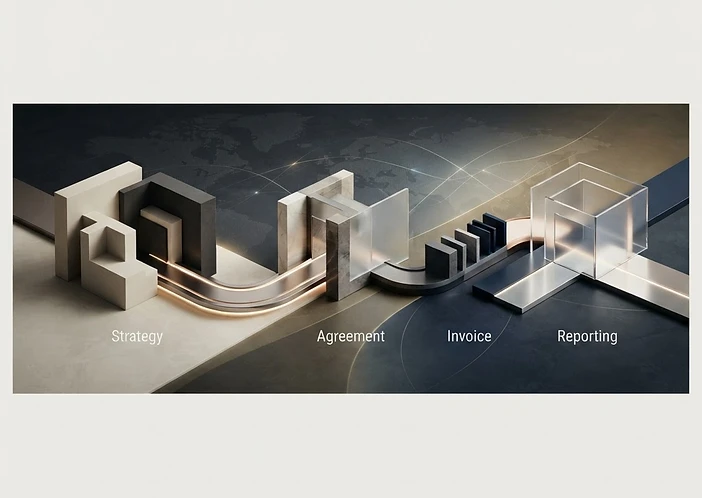
Reporting should be the output, not the strategy
The accountant’s transfer-pricing report is an important statutory output, but the report should reflect a transaction framework that already exists. Under the 2026 forms framework, Form 48 succeeds the familiar Form 3CEB for the relevant accountant’s report.
The principle remains straightforward: identify the transaction early, price it deliberately, document it contemporaneously and report it accurately.
Perspective
See further
The strongest transfer-pricing file is not created by writing more at year-end. It is created by making better commercial and documentation decisions throughout the year.
At Puneet Puri & Company, we connect transaction design, agreements, FAR analysis, pricing, documentation, accounting and reporting so that transfer pricing reflects the way the business actually operates.
Official sources
References & regulatory framework
Publication note (11 August 2026): the Income-tax Act, 2025 / Income-tax Rules, 2026 framework applies from 1 April 2026. References to familiar 1961 Act concepts or Form 3CEB are historical/contextual where used; current-year filings should be checked against the applicable 2026 provisions and forms.
Disclaimer: This article is intended for general informational purposes and does not constitute tax, legal, investment or regulatory advice. The application of Indian and overseas laws depends on the facts and circumstances of each transaction and the law applicable at the relevant time.